You are here: Home/Home/ How to Protect a Home from Kitchen Fire?
How to Protect a Home from Kitchen Fire?
When most people think of kitchen fires, they imagine a stovetop blaze that quickly spreads to the whole house and the cabinets. However, most kitchen fires start in the oven or microwave. And while these smaller fires may not seem as dangerous, they can still cause a lot of damage if not extinguished quickly.
The best way to protect your home from a kitchen fire is to be proactive and take simple safety precautions. First, never leave your cooking unattended. If you have to leave the kitchen, turn off the stove or oven even for a minute. And make sure that any flammable items like pot holders or towels are far away from the heat source. This blog post provides more detailed tips on protecting your home from kitchen fires.
How Do Kitchen Fires Start?
The leading cause of home structure fires is Cooking Equipment. That’s according to the National Fire Protection Association (NFPA). In fact, between 2013-2017, cooking equipment was involved in 43% of all reported home structure fires.
There are many different types of cooking equipment, but the most common items involved in kitchen fires are:
Stovetop burners
Ovens and broilers
Microwaves
Deep fryers
One of the main reasons cooking fires are so common is that people often leave their food unattended while cooking. It’s important never to leave your kitchen while cooking, even if it’s just for a minute. If you have to leave, turn off the stove or oven first.
Another common cause of kitchen fires is grease. When cooking with oil or grease, it’s essential to use caution. If the oil gets too hot, it can easily catch fire. And once a grease fire starts, it isn’t easy to put out.
What Are the Types of Kitchen Fires?
Following are the types of kitchen fires:
Oven or stovetop fires: These fires are usually caused by unattended cooking, and they can quickly spread to the cabinets and then the whole house.
Microwave fires are often caused by overheated food or electrical problems. They can cause a lot of damage if not extinguished quickly.
A malfunctioning compressor or electrical problem usually causes refrigerator fires, and they can quickly spread to the rest of the kitchen.
Dishwasher fires are usually caused by overheated dishwashers or defective wiring, and they can quickly spread to the rest of the kitchen.
Why Is there a Need to Protect my Home from Kitchen Fire?
Following are the reasons to protect my home from kitchen fire:
To prevent the spread of fire: There is a need to protect my home from kitchen fire to prevent the spread of fire. If the kitchen fire is not extinguished quickly, it can spread to other house parts and cause more damage.
To prevent injuries: Another reason to protect my home from kitchen fire is to prevent injuries. Even a small kitchen fire can cause severe burns if someone is not careful.
To prevent property damage: Another reason to protect my home from kitchen fire is to prevent property damage. A kitchen fire can quickly spread and damage other parts of the house, including the furniture and appliances.
To prevent loss of life: The most important reason to protect my home from kitchen fire is to prevent loss of life. A kitchen fire can quickly become out of control and lead to fatalities.
To minimize the risk of insurance claims: Another reason to protect my home from kitchen fire is to minimize the risk of insurance claims. If a kitchen fire damages your property, you may have to file an insurance claim. But if you take precautions to prevent kitchen fires, you can minimize the risk of having to make a claim.
How to Protect my Home from Kitchen Fire?
Following are the ways to protect your home from kitchen fire:
Keep your stove and oven clean: One of the best ways to prevent kitchen fires is to keep your stove and oven clean. Make sure you regularly clean the stovetop and oven surfaces and the filters in the oven.
Never leave your cooking unattended: As mentioned earlier, never leave your cooking unattended. If you have to leave the kitchen, turn off the stove or oven even for a minute.
Keep flammable items away from your stove: Things like oven mitts, wooden spoons, and dish towels can easily catch on fire. Keep them away from your stove to prevent them from catching on fire.
Store kitchen supplies safely: Make sure you store your kitchen supplies safely. For example, don’t store. Flammable items like cooking oil near the stove.
Install a smoke alarm: A smoke alarm can help you detect a kitchen fire early, which gives you a better chance to put it out before it spreads. Test your smoke alarm regularly and change the batteries as needed.
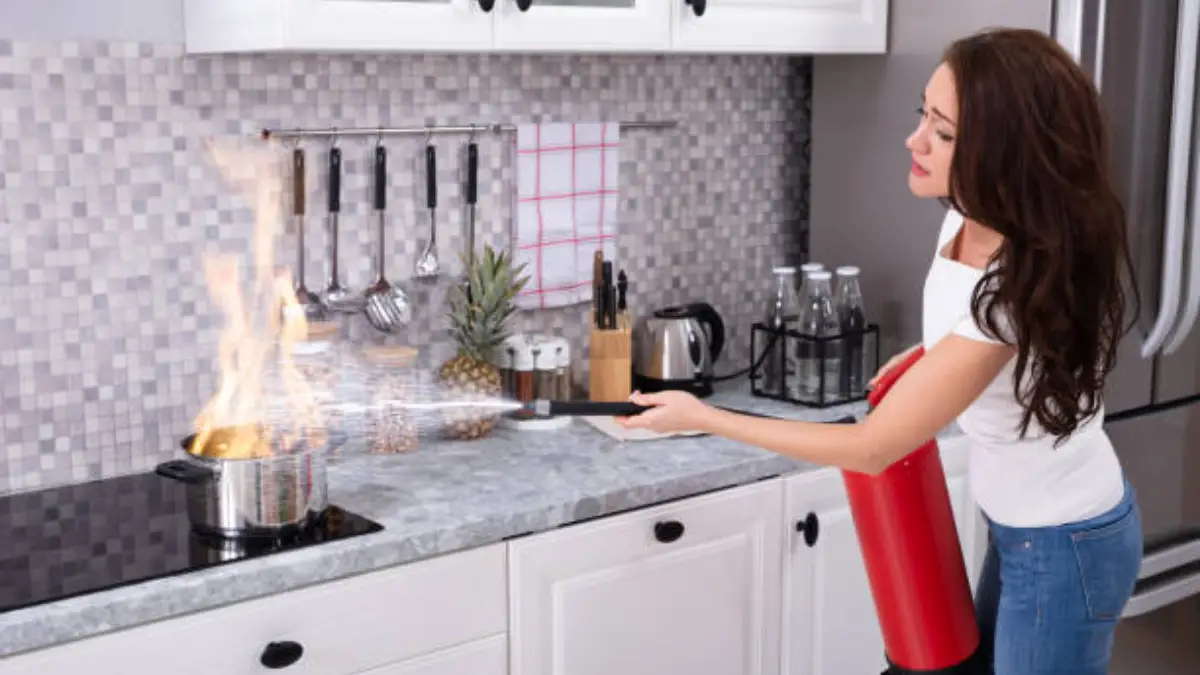
Know how to use a fire extinguisher: In a kitchen fire, you’ll need to know how to use a fire extinguisher. Be sure to read the instructions carefully and practice using them before you need them.
With these tips, you can help protect your home from a kitchen fire. By being proactive and taking some simple precautions, you can minimize the risk of a kitchen fire spreading to other parts of the house.
What to Do if There Is a Kitchen Fire?
If you have a small fire in your kitchen, the best thing is to smother it with a wet towel or blanket. It will deprive the fire of oxygen and hopefully put it out. If the fire is too big to be smothered, you should evacuate immediately and call the fire department. Do not fight the fire yourself, as it is hazardous. Remember never to use water to put out a grease fire, as this will only worsen the fire.
How Do You Stop a Kitchen Fire?
Following are the ways to stop a kitchen fire:
Smother the fire with a wet towel or blanket- This will deprive the fire of oxygen and hopefully put it out.
Evacuate immediately and call the fire department- Do not fight the fire yourself, as it is hazardous.
Do not try to fight the fire yourself- As mentioned earlier, never try to fight the fire yourself, and it is hazardous, and you could get injured.
Remember never to use water to put out a grease fire- If you have a grease fire, do not try to put it out with water, which will only worsen the fire.
Call 911- If you can’t put out the fire yourself, or if the fire is spreading, you should call 911 immediately.
Conclusion
To protect your kitchen from a fire, you must have an emergency plan. You should designate two exits- one for the stove and one as a back door exit. It’s also important to keep these areas clear of clutter when cooking so nothing can catch on fire or block escape routes. Be sure that everyone in your household knows the emergency plan and has practiced it so that everyone knows what to do if a fire starts. By following these simple tips, you can help keep your kitchen safe from fire hazards.





Leave a Reply