The Solar for Schools Program in Canada is a government-funded initiative that encourages the use of solar energy in Canadian schools. The program provides funding and support to Canadian schools that want to install solar panels on their property. Natural Resources Canada administers the Solar for Schools Program, a department of the Canadian federal government.
The program was launched in 2011, and as of 2016, over 1,000 schools across Canada have benefitted from the program. The Solar for Schools Program has successfully reduced greenhouse gas emissions and promoted the use of renewable energy in Canada.
The Solar for Schools Program is just one of many initiatives that the Canadian government has undertaken to promote solar energy in the country. In 2015, the Canadian government announced a $1.4 billion investment in solar energy projects. This investment is expected to create over 3,700 jobs and generate enough electricity to power over 600,000 homes.
How Is Solar Energy Better?
Solar energy is a renewable resource that can generate electricity, heat water, and power homes and businesses. Solar energy is better for the environment than traditional forms of energy because it does not produce greenhouse gases. Additionally, solar energy is a domestic source of energy that can help reduce dependence on foreign sources of oil and gas. Solar energy is also becoming more affordable as technology improves and costs decline.
Solar energy is a clean and renewable resource that can help reduce our dependence on fossil fuels. The Solar for Schools Program is helping to build a cleaner, more sustainable future for Canada.
What Is Solar for Schools’ Programs?
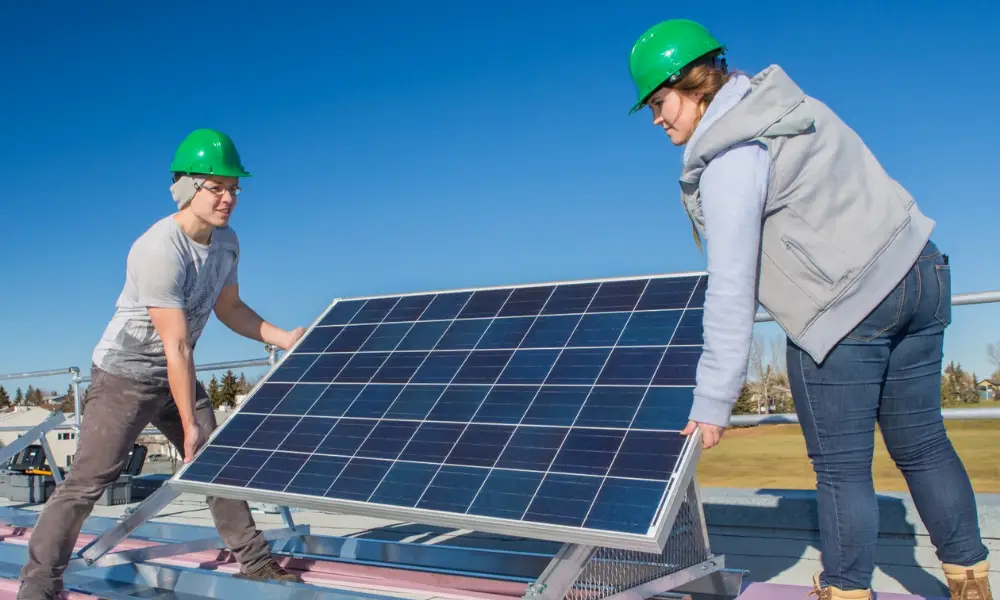
Solar for Schools is a program that uses solar energy to assist schools in reducing their carbon footprint. The program funds, designs, installs, and operates solar panels directly or through partners on school rooftops.
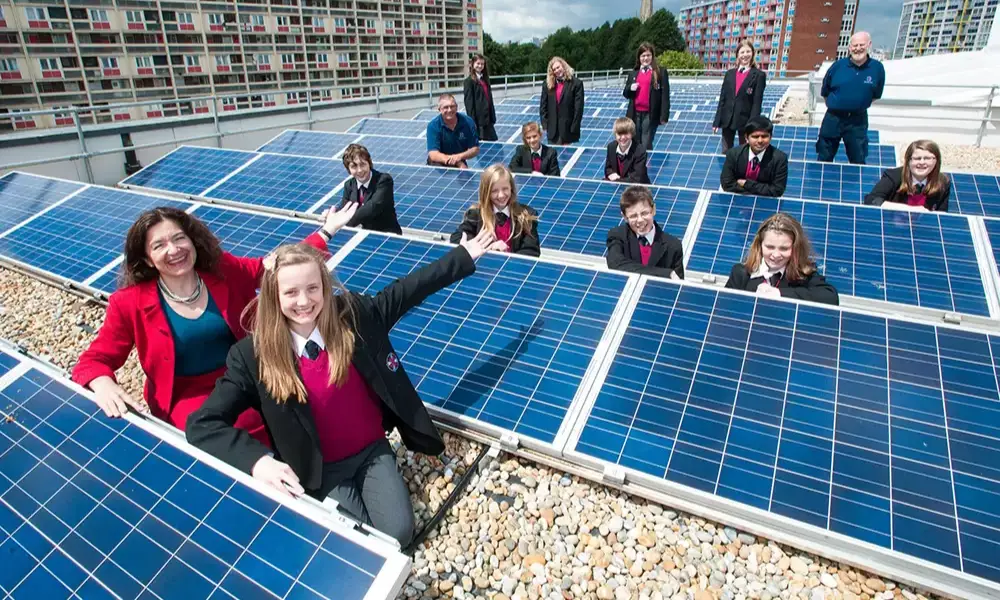
In addition, the program uses the solar panels put on the roof as a teaching tool. The program provides online modules and experimental kits covering a wide range of topics, from physics and engineering lectures for high school students to energy and sustainability materials for elementary and kindergarten students.
This program does all of that to get money to put solar panels in schools to generate electricity, teach children about renewable energy, and lessen your environmental effect.
Why Should Somebody be a Part of This Program?
Installing a solar PV system will provide the following benefits:
They provide a practical learning experience for students about renewable energy and climate change,
demonstrate your school authority’s commitment to sustainability and social responsibility, generate free power for the solar system’s entire 25+ year life,
reduce your utility bills so you can reinvest those savings into other priorities across your schools,
provide a practical learning experience for students about renewable energy and climate change
Solar for Schools is a program in which many school districts participate.
Who Can Apply?
Schools in Alberta that provide Kindergarten (K) and a set of grades 1-12 and report to Alberta Education School Authorities classed as Public, Separate, Francophone, and Charter are eligible to participate. Solar panels can be installed in both old and new schools.
School boards can go to the Alberta Education website. To see if they fulfill the program’s definition of a “School Authority,” go to the Alberta Schools and Authorities website.
The initiative does not apply to schools in School Authorities classified as Private, Provincial, Federal, or First Nations.
Where Does the Program Get Funding?
Each solar PV system project must meet the following requirements to be eligible for funding:
For the duration of the solar system’s existence, it must be installed on a facility or parcel of land owned by the School Authority.
The solar system must be brand new, have a capacity of at least 2 kilowatts (kW DC PV array capacity), be grid-connected, and comply with Alberta’s Micro-generation Regulation.
A qualified installer (not self-installed) who is a member of either Solar Alberta or the Canadian Renewable Energy Association must design and install the solar system.
The School Authority can combine financing incentives with the Solar for Schools Program as long as the program’s overall cost is not exceeded.
About Education
Participating schools must include an educational component in their students’ curriculum that emphasizes the necessity of combating climate change and how renewable energy can aid in this endeavour.
Curriculum integration possibilities include:
Accepting a program partner’s invitation to join an educational program for kids and instructors, which includes:
People for Energy and Environmental Literacy (PEEL) – Lesson Plans – Inside Education – Climate Change Education Project
Educator Training for People for Energy and Environmental Literacy (PEEL)
Proposing an independent educational component prepared by the participating School Authority demonstrates how the school will integrate a solar PV educational component into the curriculum that engages students and meets the Action Centre’s educational criteria.
School districts that qualify can submit several applications, but only for money up to $5 million. School districts can apply for up to $1.5 million in funding to build new schools.
How to Apply?
Step 1: Fill up and submit an Expression of Interest form. It is a fast, non-binding step that will allow us to learn more about your project, estimate the amount of financing you might receive, and guide you through the following steps.
Step 2: Locate solar contractors and obtain three or more bids to validate pricing and system size for your school building or land. Many solar firms will perform this service for free if the property is within their service area.
Step 3: Allocate capital reserve funds or budget the project as part of an existing infrastructure project. Then, as the last step, you must identify additional funding sources that can be combined with the Solar for Schools Program. More funding sources can be found on this page from the Alberta Council for Environmental Education.
Step 4: Fill out an application. Sign a contract with the solar installer you’ve chosen and work with them to finish the Solar for Schools Program application. Then, when the project is finished, sign a Funding Agreement, install your solar system, and collect your funding.
Conclusion
The energy sector accounts for over three-quarters of all greenhouse gas emissions. An energy revolution to a more clean, renewable energy system is critical to meet global targets to decrease global warming.
So, to meet this challenge, solar energy is the best option to combat this.





Leave a Reply